SellerSonar coupon code searches usually happen when you want cheaper Amazon listing monitoring without cutting corners. As of March 2026, I couldn’t verify a public, always-available code on SellerSonar’s official pricing and terms pages, so this guide focuses on savings you can actually repeat: free-trial testing, annual billing, right-sizing ASIN/keyword limits, and legitimate “beat the price” requests.
You’ll also get a clean promo-apply walkthrough (for private codes), a fail checklist, and a reality check on refunds and renewals—so you can subscribe with confidence and avoid surprise charges later.
-
Reviews
-
Last Used
-
Date Ends
-
Type
-
country
-
Date Added
If you’re looking for a SellerSonar coupon code, you’re probably trying to lower the cost of 24/7 Amazon monitoring without losing coverage when a listing goes sideways. As of March 2026, I couldn’t confirm a public, always-on coupon code that SellerSonar advertises as “works for everyone,” so the winning strategy is to use verified savings levers baked into the product. You’re a solo seller protecting a few hero ASINs.
You’re a brand team watching Buy Box and reviews daily.
You’re an agency that needs alerts at scale. Your checkout may differ, so rely on the order summary you see on your screen. This isn’t magic… pricing + policy, and that’s why this page prioritizes plan math and terms over coupon rumors.
Micro-check #1: on SellerSonar’s plan comparison table, the annual option is presented as a savings toggle (for example, “SAVE 20%”). Micro-check #2: the SellerSonar Terms of Use include a refund section that references an “up to 29-day free trial” and a time-limited window for monthly refund requests. If the checkout template changes, this may change.
SellerSonar coupon code status
Here’s the boring truth.
SellerSonar’s official pages emphasize plan tiers, add-ons, and a trial path more than a permanent coupon program. That’s common for SaaS tools that price by usage (ASINs, keywords, alerts). It doesn’t mean discounts never exist—private codes can appear via partners, email campaigns, or time-boxed promos—but it does mean you should treat third-party “100% working codes” as unverified until your total drops at checkout.
Screenshots can lie; your order summary is the judge. If a code changes nothing, the effective discount is zero, even if a coupon site claims otherwise. The goal is clean savings you can repeat next month, not a one-time lottery ticket.
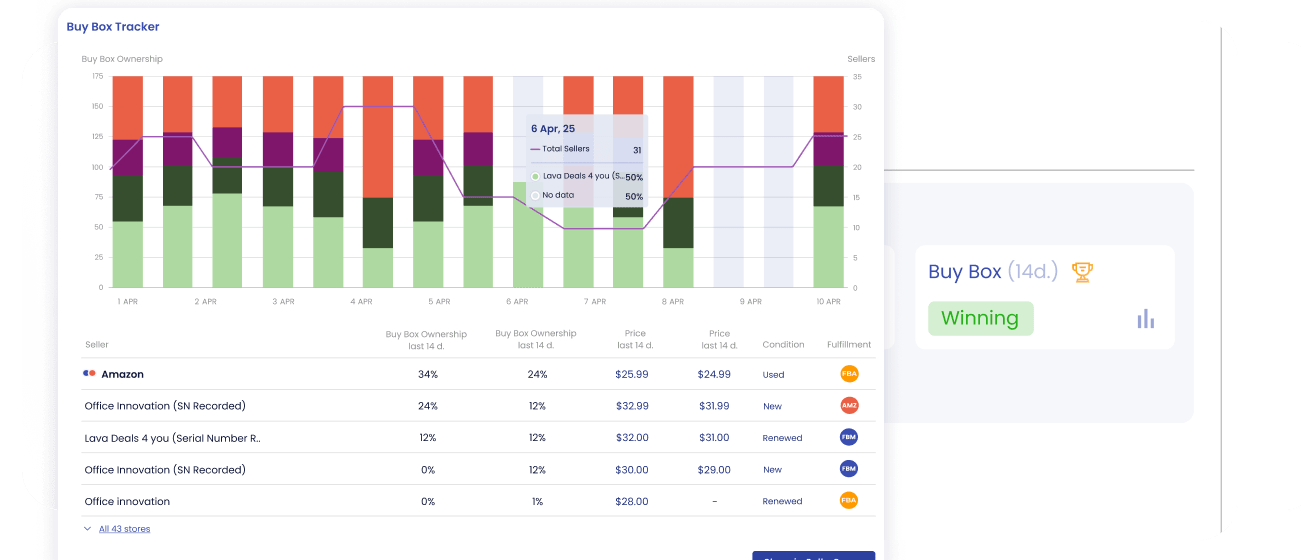
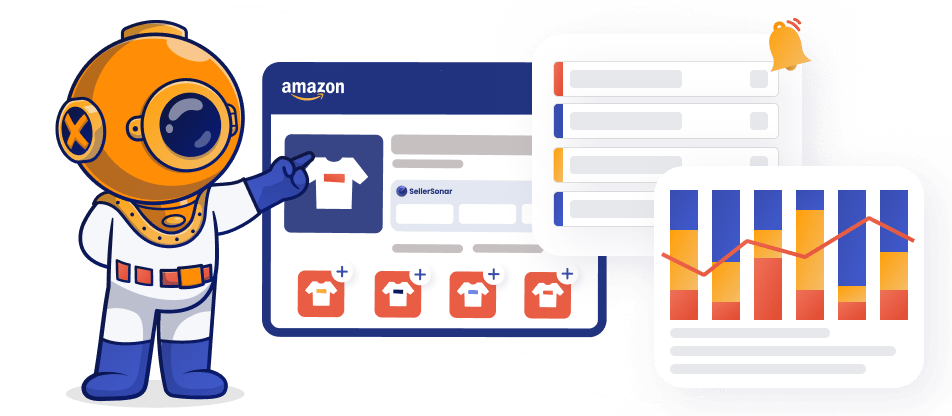
Best for: Amazon sellers and brand teams who need real-time alerts for listing changes, Buy Box movement, review spikes, keyword rank shifts, and competitor behavior.
Not ideal for: anyone who only checks performance once a month, or teams that want a single “all-in-one suite” and won’t act on alerts quickly.
Check with a professional first if: you operate under strict compliance rules (regulated products, claims, data retention) and need guidance on workflows, documentation, or policy alignment.
If you want to confirm what’s live without guessing, open the official path here and compare plan totals on your own screen: SellerSonar signup and plan options.
Best ways to save (no-code)
No magic—just math.
When a public coupon isn’t clearly published, your best savings come from reducing waste: buying only what you’ll monitor, using the trial properly, and switching billing only when your usage is stable. A discount that doesn’t apply isn’t a discount.
- Start with the trial and test your workflow: set up a small set of ASINs and keywords, confirm alerts reach your team (email/Slack, if applicable), and validate that you’ll actually act on notifications.
- Right-size your plan by monitoring volume: pay for the number of ASINs/keywords you actively protect, not a “someday” catalog that no one reviews.
- Use annual billing only when usage is predictable: annual discounts can be real value if you already know this is a long-term part of your stack.
- Use add-ons instead of overbuying a higher tier: if you only need a small bump in monitoring, add packs can be more efficient than jumping to the next plan.
- Ask for a price beat when you can prove a match: SellerSonar’s plan table mentions a “we’ll beat it” style offer when you show proof of a lower like-for-like price; that can be more reliable than coupon hunting.
- Reduce “alert noise” to reduce cost: fewer irrelevant alerts means you can operate on a smaller plan longer, because you’re tracking what matters instead of tracking everything.
Read the policy once, then stop worrying: focus on whether the tool prevents one expensive incident (suppression, Buy Box loss, hijack) because that single save can cover months of subscription fees.
How to apply a promo (steps)
Start from official buttons.
If you receive a private promo code (partner, email, event), apply it during the official signup/billing flow and verify that the final total changes before you pay. Keep everything in writing for future-you.
- Open the official signup or upgrade path from the SellerSonar site (or your account billing page if you’re already registered).
- Select the plan and billing interval you actually want (monthly vs annual), then proceed to payment.
- Locate the discount/promo field (if present), paste the code exactly as provided, and apply it.
- Confirm the order summary updates (plan price, interval, taxes/VAT if applicable) before you complete payment.
- Save the receipt email and note your renewal date in your calendar so you can reassess before the next billing cycle.
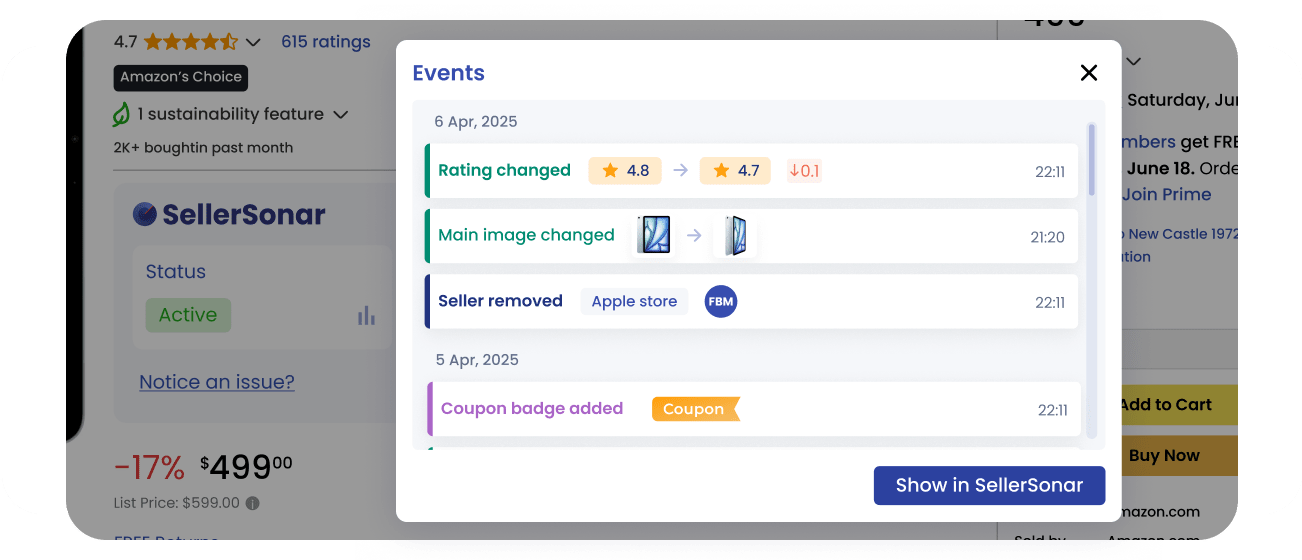
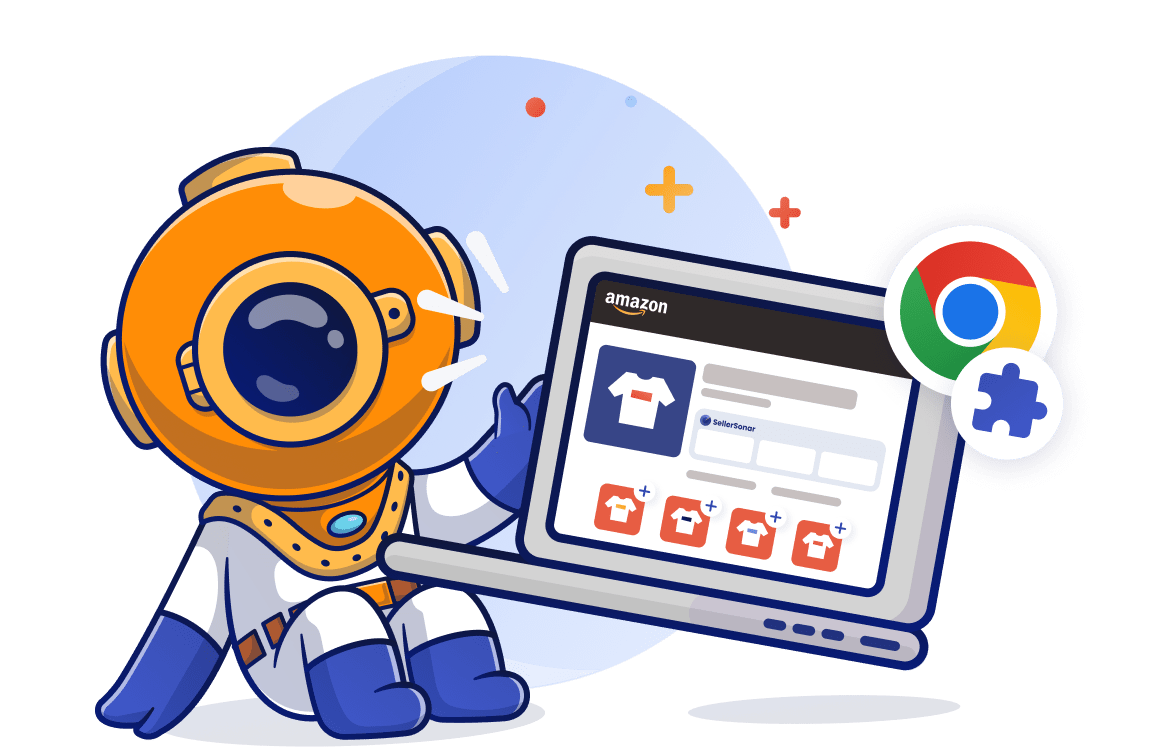
Need a quick visual overview of how SellerSonar works in practice (especially the browser overlay and live events)? This official tutorial is a good orientation before you commit to a paid tier:
Renewals are boring, right up until they aren’t—so set that reminder even if you think you’ll “definitely remember.”
Code fail checklist
When a promo code fails, it’s almost always a rules mismatch, not a mystery. Treat coupon blogs as rumors until checkout agrees, and run this checklist before you waste time searching for “another code.”
- Wrong offer scope: the code may apply only to a specific plan tier, interval, or campaign link.
- Eligibility rules: some promos are new-customer only, partner-only, or account-specific.
- Expired or capped redemptions: campaigns can end or hit usage limits without fanfare.
- Stacking is blocked: annual discounts, trials, or special offers may not allow an additional coupon.
- Formatting issues: remove extra spaces, match capitalization, and re-type if needed.
- Cart mismatch: switching tabs or changing billing interval can invalidate a promo tied to a specific checkout state.
If you’re still stuck, contact SellerSonar support with the code, the plan you selected, and a screenshot of the order summary—support can confirm whether the promo is valid for that plan and interval.
Pricing/bundles + refund/trial reality check
SellerSonar’s pricing is usage-based and plan-tiered, with an annual savings option shown on official tables and extra packs available if you need more monitored ASINs or keywords. Price beats are real savings, when documented, and add-ons can be cheaper than a full tier jump if you only need a small capacity increase.
I first assumed “software refunds are automatic,” then realized SellerSonar’s Terms of Use describes refunds as discretionary and tied to eligibility rules, plus it encourages using the trial to evaluate fit before paying.
That policy reality changes how you should buy: you want to confirm the tool fits your workflow during the trial, then subscribe only when you’re confident you’ll act on alerts. Rule of thumb: if you won’t review alerts at least weekly, downgrade your plan (or don’t subscribe) until you have the operational bandwidth to use it.
If you’re evaluating tiers, make the decision based on your monitoring map: how many ASINs are revenue-critical, how many keywords you truly need to track, and whether you need “basic” alerts only or broader alert coverage. The fastest way to overspend is to monitor everything because it feels safe—monitor what you can actually respond to.
Seasonality
Discount behavior in SaaS tends to be seasonal, but not always predictable. SellerSonar has run seasonal messaging and deal-oriented landing experiences at times, and the safest approach is to check the official pricing pages during high-attention periods (major holidays, Q4, big product announcements) rather than trusting “today only” coupon claims on third-party sites.
If you’re planning ahead for a team rollout, do a two-step purchase: trial now to validate workflow, then buy during your chosen season if the total price meets your budget. That way you don’t delay protection while waiting for a coupon that might never appear.
Alternatives
If SellerSonar isn’t the right fit for your stack, these alternatives are commonly considered by Amazon sellers depending on whether you need listing protection, keyword tracking, or a broader suite:
- Helium 10: a larger suite with research and keyword tooling (often more “all-in-one”).
- Jungle Scout: popular for product research and listing workflows, depending on your needs.
- DataHawk: focused on analytics and tracking, often used by brands with reporting needs.
- SellerApp: broader toolset for sellers that want research + optimization.
- AMZAlert (and similar alert tools): if you only need specific alert categories and not a full monitoring suite.
The best alternative is the one that matches your operating cadence: if you won’t act fast, a lighter tool may be enough; if you need deep reporting, pick the product that makes exporting and sharing painless.
FAQs + operator notes
Q: Is there a verified SellerSonar coupon code right now?
A: As of March 2026, I couldn’t verify a public, always-available coupon code on SellerSonar’s official pricing and terms pages. If you receive a private code from a partner or email campaign, apply it at checkout and confirm the order summary total changes before paying.
Q: What’s the best way to save if I don’t have a code?
A: Use the trial to confirm fit, right-size your plan by the ASINs/keywords you actually monitor, and switch to annual billing only when usage is stable. If you can document a like-for-like cheaper competitor price, use the official “beat it” request route.
Q: Does SellerSonar offer a free trial?
A: SellerSonar describes trial access on official pages and references an “up to” trial period in its Terms of Use. Treat the trial as your main risk reducer: test alerts, dashboards, and workflows before committing to a paid tier.
Q: Where do I enter a promo code?
A: If you have a private promo, look for a discount/promo field during the official billing flow. Apply it, then verify the order summary reflects the discount before completing payment.
Q: What should I do if my code doesn’t work?
A: Check scope (plan/interval), eligibility (new vs existing customer), expiration, and stacking rules, then retry with correct formatting. If it still fails, contact support with the code and a screenshot of your order summary.
Q: Is SellerSonar “worth it” without a coupon?
A: It can be, if the tool prevents a single high-cost incident (Buy Box loss, suppression, hijack, or missed review spike) and your team actually acts on alerts. If you won’t use it weekly, buy smaller or wait until you have the operational bandwidth.
Operator notes: Last checked: March 2026. I reviewed SellerSonar’s official plan/pricing pages (including annual savings language, add-on packs, and price-beat messaging) and its Terms of Use refund section. I could not verify any public, always-available coupon code that is officially published as “works for everyone,” and the app signup page requires JavaScript, so checkout UI details may vary by device and region.
