
Winston AI coupon code searches usually mean you want a real discount on AI detection and plagiarism checks without falling for sketchy “verified” strings. As of September 2026, I couldn’t confirm a single always-on, public code on the official pricing page, but Winston AI does offer predictable ways to save—starting with its free plan/trial credits and switching to annual billing only after you’ve proven fit.
Educators, SEO teams, and writers use Winston for different reasons, so this guide shows the safest promo steps, a quick code-fail checklist, and no-code tactics that often cut your first-year cost more reliably than hunting coupons.
As of September 2026, this Winston AI coupon code guide is built to help you save money without playing paste-and-pray. Educators checking student submissions. SEO editors auditing AI drafts. Publishers scanning content at scale.
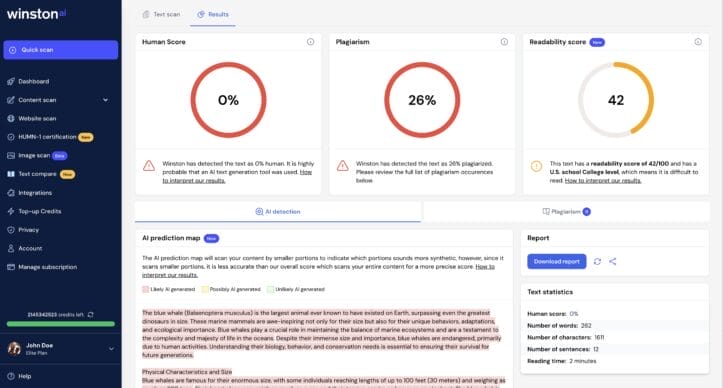
Your checkout may differ, especially if you switch between Monthly and Annual. This isn’t magic—pricing and policy decide the deal. Here’s the boring truth you can verify today. On the official pricing page, the Free plan card shows "2,000 credits / 14 day trial", and in the dashboard billing flow the cancel control is labeled "Cancel Subscription". If you want a consistent path to compare what’s available right now, use this Winston AI deal link and then judge the final total on your own screen.
Winston AI coupon code status
Winston AI is positioned as an AI-content detector with add-ons like plagiarism checking and AI image/deepfake detection. People search for a Winston AI coupon code because they want a lower first invoice, but SaaS discounts rarely behave like retail coupons.
Start from official buttons, then compare totals. As of September 2026, I couldn’t confirm a single always-on, public coupon code presented on Winston AI’s own pricing page. That doesn’t mean promotions never exist; it means you should treat any third-party code claim as unverified until it appears on an official Winston page, inside your account, or in an email you received directly from Winston.
Coupons are nice, but renewals are the real bill. Winston AI’s pricing page lists a Free plan and paid tiers (Essential, Advanced, Elite), with a toggle between Monthly and Annual pricing views. If you’re buying for a team or institution, it also offers a contact-us path for custom plans.

Best for: educators or academic staff doing integrity checks, SEO teams screening drafts before publishing, and publishers needing shareable reports for clients or editors.
Not ideal for: anyone expecting a guaranteed verdict without context, or buyers who need a generous refund window after heavy usage.
Check with a professional first if: you work in a regulated environment, you must follow institutional integrity policies, or you need legal/compliance review for how content is processed and stored.
Rule of thumb: buy the smallest plan that covers one full month of your real scanning volume, then upgrade only after you’ve measured how often you actually scan and share reports.
No magic—just math you can audit monthly. The rest of this page focuses on reliable savings even if you never find a code that works.
Best ways to save (no-code)
Use the trial to measure, not to guess. Winston AI’s free plan is useful for validating your workflow: paste text, upload a document, generate a report, and confirm how the results fit your use case before you commit money.
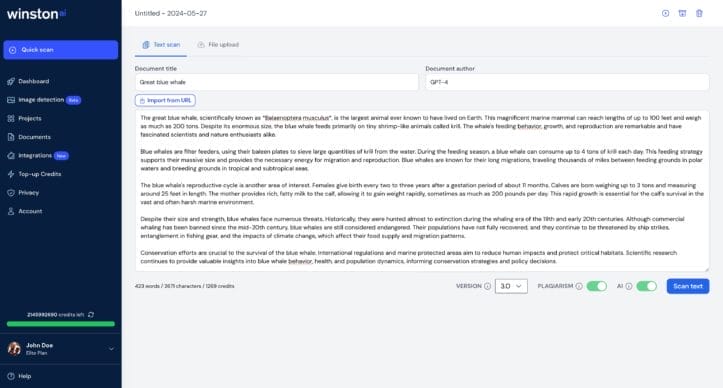
- Run a real pilot first: scan the same mix you’ll scan in production (student essays, blog drafts, client submissions), then record how many words you processed in a week.
- Choose Monthly until your usage is stable: monthly billing tends to be the lowest-risk way to validate fit before you commit longer-term.
- Switch to Annual only after proof: annual pricing can lower the effective monthly rate, but it only saves money if you actually keep using the tool through the term.
- Standardize your workflow: decide when you scan (pre-submission, pre-publish, or pre-client-delivery) so you don’t rescan the same content repeatedly.
- Batch your checks: scanning in scheduled batches reduces just-one-more-scan creep that quietly increases consumption.
Don’t chase codes; chase a repeatable workflow. If your process is consistent, the plan choice becomes obvious and the discount becomes optional rather than necessary.
How to apply a promo (steps)
If you have a legitimate promotion, apply it where Winston AI tells you to apply it, then verify the final total before paying. If the checkout template changes, this may change. Save every invoice, even when it’s boring.
- Start from an official Winston AI page or a verified partner link so the offer attaches to the right account.
- Select your plan tier and billing cadence first, because many promotions are tier- or cadence-specific.
- Enter the code exactly as provided and confirm the discount is reflected in the order summary.
- Save the invoice or receipt so you can verify what was applied at renewal time.
If a code seems wild, assume it’s unverified. The best discount is the one you can trace back to Winston AI and document for finance.
Code fail checklist
Policy beats promos when something goes wrong. If a coupon or promo doesn’t apply, it’s usually an eligibility rule rather than a typing mistake, so troubleshoot with intent instead of cycling through random strings.
- Plan mismatch: the code applies only to a specific tier (for example, not valid on the plan you selected).
- Cadence mismatch: the promotion is limited to Monthly or Annual pricing and won’t apply to the other.
- Account status: the offer is restricted to new accounts, first payment only, or a specific audience (webinar, partner, institution).
- Non-stackable pricing: an existing promotion or negotiated rate prevents additional discounts from stacking.
- Campaign timing: the promo expired, hit a redemption cap, or was replaced by a newer offer.
- Different purchase path: sales-assisted or custom plans often apply adjustments on an invoice rather than through a code box.
Start from official buttons, not random coupon lists. If the code came from an official email or partner page and still fails, contact support with the promo source and ask which eligibility rule is blocking it.
Pricing/bundles + refund/trial reality check
Here’s the boring truth you can price out: Winston AI’s paid plans are credit-based, and the right tier is mostly a function of how many words and documents your team will scan each month. The public pricing page shows monthly prices for Essential, Advanced, and Elite, and it also shows lower per-month numbers on the Annual view. I first assumed the cheapest path was to hunt a universal code, then realized the bigger lever is choosing the cadence and tier you’ll still like at renewal.
Refund expectations matter most when budgets are tight. Winston AI’s Terms & Conditions state that purchases are non-refundable, and they also describe a 14-day free trial for new users where the account is not charged unless upgraded. That policy pushes you toward a simple strategy: treat the free period as a functional test, and keep your first paid month small until you are confident the workflow fits your institution or content team.
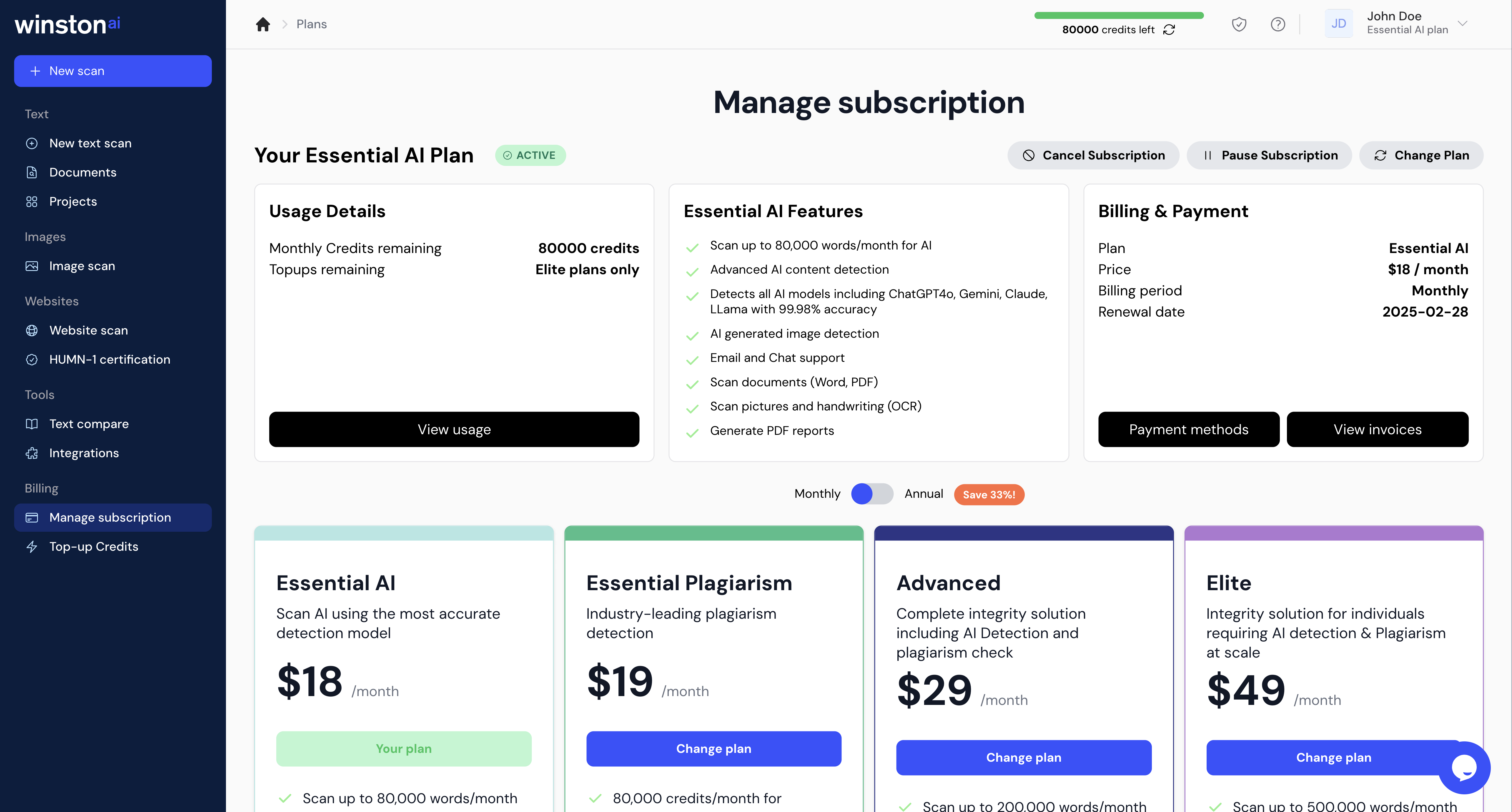
Another practical nuance: Winston AI’s help center explains that after you cancel, the plan typically remains active until the end of the billing cycle and you should receive confirmation emails about the scheduled cancellation. This is useful for planning, because it tells you when to set internal reminders and when to export reports for record-keeping.
Math beats hype every single time you renew. If you need a clean procurement story, compare plans using one unit: cost per page or cost per thousand words scanned in your real workflow, not your aspirational scenario.
Seasonality
Discount timing is unpredictable, but your scanning spikes usually are not. Academic calendars, editorial calendars, and launch cycles all create predictable bursts of checking, and those bursts should influence whether you choose Monthly or Annual billing.
- Education: midterms and finals often increase integrity checks, so pilot earlier in the semester when you have time to tune process.
- SEO and publishing: quarterly content sprints can create scanning peaks, so match your plan to the months you actually publish most.
- Agencies: onboarding waves create bursts of client submissions, so establish a standardized scanning checklist before scaling volume.
Start from official buttons, then compare totals. If you expect usage to be seasonal, Monthly can be the safer default until you can show consistent value over several cycles.
Alternatives
If Winston AI is not the right fit, compare alternatives using the same test set and the same policy expectations. The tool that wins is the one your team can operate consistently and explain to stakeholders without drama.
- GPTZero: commonly used for quick checks and education workflows, with its own scoring approach and limitations.
- Copyleaks: often used by organizations needing plagiarism plus AI detection options, depending on plan.
- Originality.ai: popular with SEO publishers who want site-focused scanning and team workflows.
- Turnitin: a common institutional choice where academic integrity processes are formalized and procurement is centralized.
- Manual review rubric: for high-stakes use, a documented review process can reduce over-reliance on any single score.
Policy beats promos when something goes wrong. If you are choosing for an institution, prioritize auditability and clear internal guidelines over whatever coupon is trending that week.
FAQs + operator notes
Q: Is there a Winston AI coupon code that always works?
A: As of September 2026, I couldn’t confirm a universal, always-on public code presented on Winston AI’s official pricing page. Treat codes as campaign-based and verify them through official Winston channels before relying on them.
Q: What’s the safest way to save if I don’t have a code?
A: Start with the Free plan/trial credits, measure your real scanning volume for a week, then pick the smallest paid tier that covers that volume with room for peak weeks.
Q: Does Winston AI offer a free trial for new users?
A: Yes. Winston AI’s pricing page and Terms describe a Free plan with trial credits and a 14-day free trial period for new users.
Q: Can I cancel my subscription any time?
A: The Terms say you can cancel at any time and that cancellation takes effect at the end of the current paid term. The help center also notes the plan typically remains active until the end of the billing cycle.
Q: Are refunds available after you pay?
A: Winston AI’s Terms state purchases are non-refundable, so treat the free period as your evaluation window and keep your first paid period conservative.
Q: How should I size my plan tier?
A: Use one metric: how many words or documents you expect to scan in a typical month, plus a buffer for your busiest week, then pick the smallest tier that meets that need.
Q: What’s the most responsible way to use results?
A: Use results as a signal for review, not as a standalone verdict; combine them with your own rubric and context, especially for high-stakes decisions.
Operator notes: Last checked: September 2026, using only official Winston AI pages. Verified on Winston AI’s official sources: plan names and pricing views on the pricing page, the existence of a 14-day free trial for new users, the Terms stating purchases are non-refundable, and help-center guidance for canceling. Not verified: any third-party coupon strings, discount percentages, or verified-code claims that do not appear on official Winston AI pages or inside the product.